
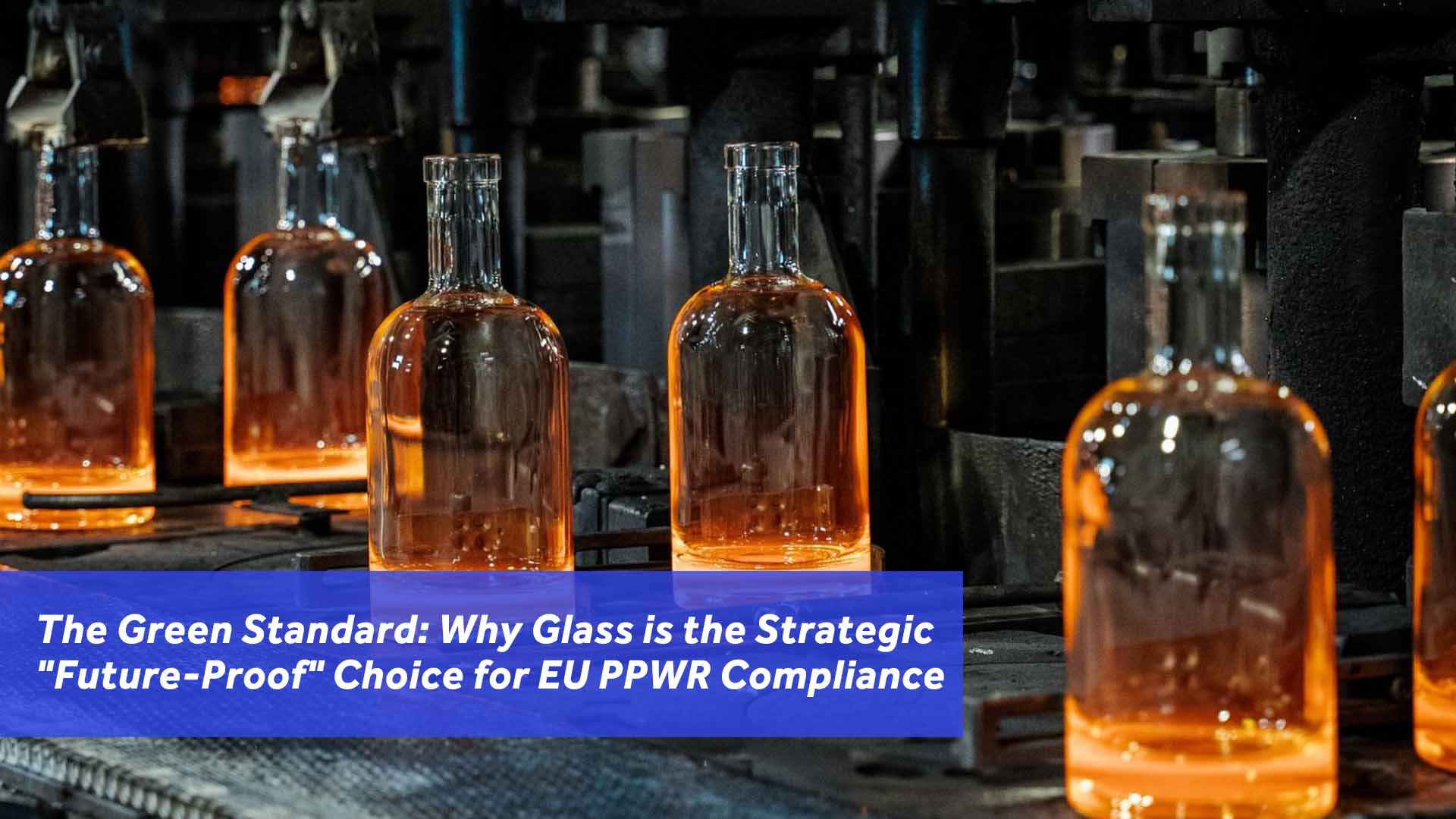
As the global push for a circular economy intensifies, the European Union is setting a new benchmark that will reshape the global packaging industry. The finalization of the EU Packaging and Packaging Waste Regulation (PPWR) – (EU) 2025/40 marks a decisive shift from optional sustainability to mandatory legal compliance. For premium spirits, wine, and cosmetic brands, the countdown to August 2026 has officially begun.
Understanding the PPWR: The Regulatory Shift in 2026
The PPWR is a centerpiece of the European Green Deal, designed to harmonize packaging rules across all member states. Unlike previous directives, this regulation is directly applicable, meaning brands must adhere to a single set of stringent rules to access the EU market.
Key Regulatory Milestones
- 1-2026 Application: By August 2026, the regulation will be fully enforceable, requiring brands to provide verifiable data on the recyclability and weight of their primary packaging.
2-2030 Recyclability Mandate: All packaging must be “recyclable at scale” by 2030. This is defined as having a recyclability grade where at least 70% of the material is successfully recovered and re-entered into the production cycle (Source: European Commission).
3-2040 Waste Reduction Targets: The EU aims for a 15% reduction in packaging waste per capita by 2040 compared to 2018 levels.
Why Glass Wins the Sustainability Race
In this new regulatory landscape, glass stands out as the only packaging material that naturally aligns with the circular economy’s highest ideals. While plastic and paper often face limitations in recycling cycles, glass offers a unique “Permanent Material” advantage.
The “Permanent Material” Advantage
Glass is 100% and infinitely recyclable without loss of quality. According to data from FEVE (The European Container Glass Federation), the EU already maintains a glass collection rate of 80.1%. The “Close the Glass Loop” initiative aims to push this to 90% by 2030, ensuring a steady supply of high-quality cullet for new production.
Chemical Inertness and Safety
As the PPWR introduces stricter rules on Food Contact Materials (FCM), the chemical inertness of glass becomes a critical asset. Glass prevents migration between the container and the product, protecting the integrity of high-end spirits and fragrances—especially important as the industry explores more reuse and refill models.
Balancing Luxury Aesthetic with Sustainability
One of the primary concerns for luxury brand owners is the “Luxury-Sustainability Paradox”—the fear that eco-friendly packaging might compromise the premium feel of the product. However, modern glass manufacturing is bridging this gap through engineering innovation.
Advanced Lightweighting Techniques
Heavy bottles have traditionally signaled luxury, but the PPWR’s focus on weight reduction is changing the rules. At Valiant Packaging, we utilize advanced blow-blow and press-and-blow techniques to reduce bottle weight by up to 15% while maintaining the structural integrity and the “prestige” refractive brilliance that luxury consumers expect.
Integrating PCR (Post-Consumer Recycled) Glass
Integrating high percentages of PCR glass is no longer just an option; it is a necessity for reducing carbon footprints. Every 10% increase in cullet (recycled glass) reduces carbon emissions by approximately 5% and energy consumption by 3%. For brands, this translates into verifiable data points for their sustainability reports and PPWR documentation.
Conclusion: Securing Your Brand’s License to Operate
Sustainability is no longer a marketing narrative; it is a strategic “license to operate” in the world’s most regulated markets. Brands that transition to high-quality, lightweight, and recyclable steklena embalaža today are not just protecting the planet—they are safeguarding their market access for 2030 and beyond.
At Valiant Packaging, we specialize in navigating these complex regulatory shifts, providing our partners with the technical expertise and manufacturing excellence required to meet the “Green Standard.”
 Slovenian
  English
  Spanish
  French
  Russian
  Arabic
  Indonesian
  Italian
  Japanese
  Czech
Czech  German
  Danish
  Korean
  Estonian
  Moroccan Arabic
  Bulgarian
  Finnish
  Greek
Greek  Hungarian
  Latvian
  Lithuanian
  Norwegian
  Polish
  Portuguese
  Romanian
  Slovak
  Swedish
  Turkish
  Ukrainian